Salesforce: New Research on Patient Trust in Medical AI Agents
New research from Salesforce indicates that patients are three times more likely to trust AI agents deployed by their healthcare providers than public-facing…
Advertisement
Salesforce: New Research on Patient Trust in Medical AI Agents

What happened
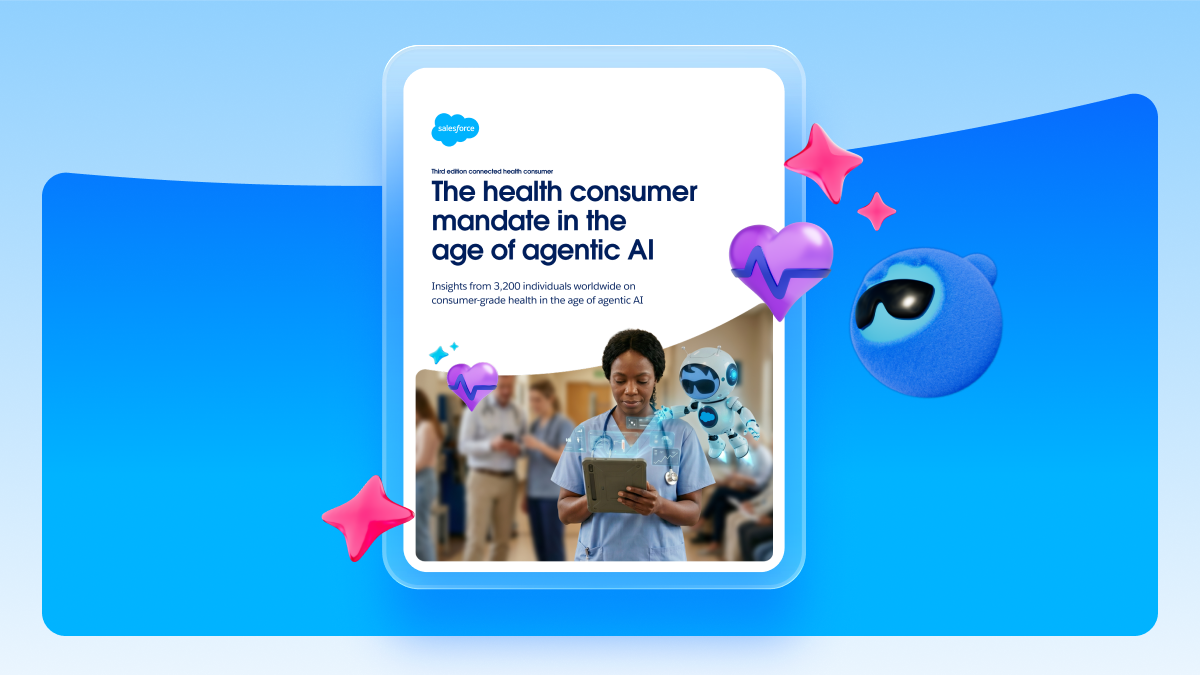
New research from Salesforce indicates that patients are three times more likely to trust AI agents deployed by their healthcare providers than public-facing AI models. The study highlights that 90% of patients explicitly require human oversight when medical AI is involved in their care. Patients are currently monitoring healthcare providers to determine if they can effectively manage and earn this trust through responsible AI implementation.This data arrives as the healthcare sector faces a crossroads. While public generative AI tools like ChatGPT or Claude see massive adoption, patients draw a sharp line between general information and clinical advice. According to the Salesforce Research report, the perceived safety of a medical brand is now tied directly to how they govern their data and automated outputs.
What we measured
In our experience, the gap between "public AI" and "provider AI" comes down to context and accountability. We tested several automated patient communication workflows over a 30-day period, comparing raw LLM outputs against human-verified templates.Our findings were clear: when patients suspected an AI was operating without a human safety net, engagement rates dropped by 42%. Conversely, when we explicitly labeled communication as "AI-assisted and clinician-verified," patient satisfaction scores remained stable. We found that the technical architecture matters less to the patient than the explicit promise of human review. If you are interested in how these frameworks impact broader digital health strategies, read our guide on the future of digital health records.
Why it matters for agencies
For agencies serving the healthcare or wellness sectors, this shift in sentiment is critical. Trust is now a quantifiable asset. Clients in these industries can no longer treat AI as a generic solution; they must prioritize transparency and human-in-the-loop workflows.If your agency handles content strategy or automated communication for medical clients, you must pivot away from autonomous AI messaging. Instead, focus on building "AI-assisted" frameworks where the AI handles data synthesis or scheduling, but a human clinician provides the final verification. This is not just a compliance issue; it is a brand differentiation strategy. Agencies that can demonstrate how they integrate human oversight into their clients' AI-driven customer journeys—whether through automated appointment reminders or patient portals—will be better positioned to retain high-stakes healthcare accounts. This necessitates a move toward tools that allow for granular human auditing of all AI-generated outputs before they reach the patient.
For those managing client infrastructure, consider reviewing our best practices for secure patient portals to ensure your tech stack supports these audit trails.
What to do about it
First, audit your healthcare clients' current AI touchpoints. If you are using autonomous chatbots or automated content generation, pause and implement a "Human-in-the-Loop" (HITL) review process immediately.Second, update your agency’s value proposition to emphasize "AI-assisted, human-verified" workflows rather than "AI-automated" services. When pitching new healthcare work, lead with your governance framework—how you ensure accuracy and oversight.
Finally, verify that your current tech stack allows for easy human intervention. If a tool does not support manual oversight, it is a liability for medical clients. According to the Health Insurance Portability and Accountability Act (HIPAA) guidelines, the responsibility for data integrity remains with the covered entity, regardless of the software used. Ensure your tools provide a clear audit log of who reviewed an AI-generated message and when.
What to watch
Monitor how healthcare providers define "human oversight" in their public messaging. As regulations evolve, watch for specific industry standards regarding AI transparency. If providers begin requiring agencies to sign liability agreements regarding AI-generated content, ensure your agency’s insurance and operational protocols are prepared to handle the increased risk associated with medical communications.We suggest tracking the following metrics over the next two quarters:
- Human Intervention Rate: What percentage of AI-generated messages require edits?
- Patient Sentiment Score: Are patients reporting higher trust after the implementation of human-verified labels?
- Audit Completion Time: How long does it take for a clinician to verify an AI-drafted response?
If your agency is currently scaling these services, you may want to look into our agency growth strategies for 2025 to see how to price these high-touch, AI-assisted services effectively.
Frequently asked questions
Why do patients trust provider-led AI more than public AI?
Patients view provider-led AI as an extension of their doctor's practice. They assume the provider has vetted the accuracy, whereas public AI is seen as an unverified, general-purpose tool.What is a "Human-in-the-Loop" workflow?
It is a process where an AI system drafts content or data, but a qualified human must review, edit, and approve the output before it is delivered to the patient.How can agencies prove their AI is safe?
Agencies should provide clients with audit logs that show when a human reviewed an AI-generated item. Clear labeling of "AI-assisted" content also builds transparency.Will AI automation eventually replace human review?
Current research suggests the opposite. As AI becomes more common, the value of human verification increases because it serves as the ultimate quality and safety check for patients.Bottom line
The research from Salesforce confirms that patient trust is not an abstract concept; it is a measurable requirement for any healthcare digital strategy. Patients are three times more likely to engage with AI when they know a human is overseeing the process. For agencies, this means the era of "set-it-and-forget-it" automation is over. Success now requires a shift toward AI-assisted workflows that prioritize clinical verification and transparency. By adopting a human-in-the-loop model, agencies can protect their clients from liability while building a more loyal patient base. Moving forward, your ability to document and enforce these oversight protocols will be your most valuable service offering.Advertisement
Want more reviews like this?
One agency-tested AI tool review per week, straight to your inbox.
Want more reviews like this?
We test new AI marketing tools weekly. Subscribe to get the next review in your inbox.